 Kauaʻi Beach Day
Safest beaches on Kauaʻi for swimming
No beach is risk-free every day, but a lifeguard tower and shelter from the surf lower the risk. The most sheltered picks are Lydgate’s breakwater ponds and Poʻipū Beach Park, plus Salt Pond. In summer, May to October, add Hanalei Bay, Kēʻē and Hāʻena Beach Park.
Updated
Our picks, not a safety rating. A tower and a reef lower the odds, but they don’t change the ocean, and the water at any of these beaches can turn rough within a morning. Check closures and today’s surf, and ask the lifeguard where to swim. If in doubt, stay out of the water.
How we picked: every beach here passes three tests. First, a lifeguard tower on the State’s list of lifeguarded beaches, staffed daily from 8 a.m. to 6 p.m. Second, something between you and the open ocean, like a boulder breakwater, a reef or the curve of a bay, or on the North Shore, the flat water of summer. Third, the right season for its shore. Six beaches pass in summer. In winter, only three do.
Summer: May to October
From May through October the State says north shores are mostly flat to small, so the North Shore’s sheltered bays join the list. South shores get the larger swells. Source: State of Hawaiʻi Ocean Safety
1
Lydgate Beach Park
East Side · Both seasons
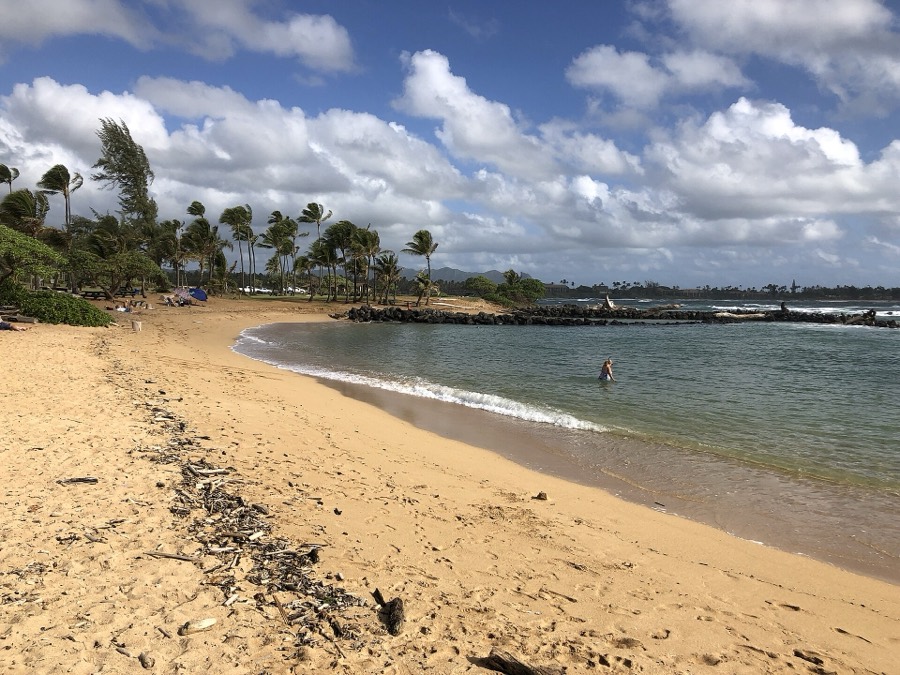
Where to swim: inside Morgan’s Ponds, the two ocean ponds a boulder breakwater has enclosed since 1964. The inner pond is the shallow one; the outer pond is deeper. What to watch: the open ocean on the far side of the boulders, and the Wailua River mouth just beside the park. The Lydgate tower is staffed daily, 8 a.m. to 6 p.m.
2
Poʻipū Beach Park
South Shore · Both seasons
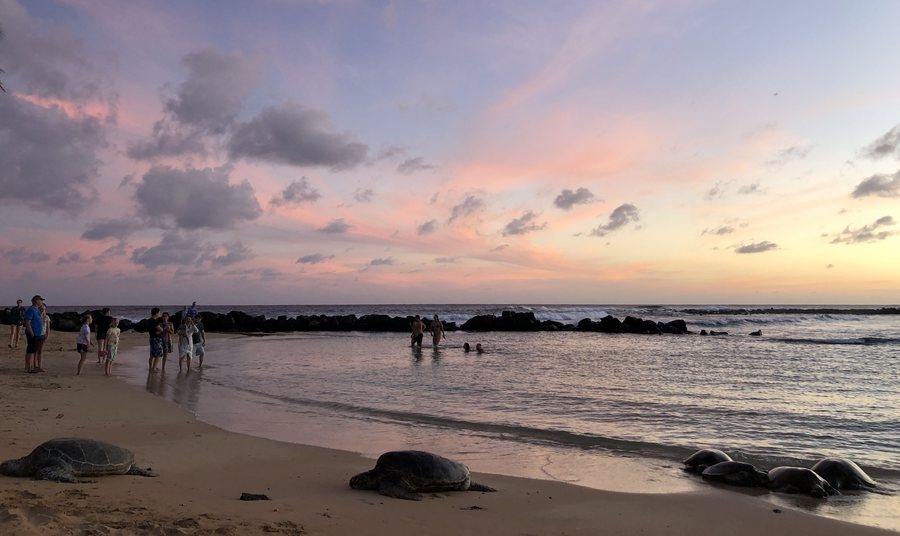
Where to swim: on either side of the sand spit that runs out to Nukumoi Point, near one of the two towers (Nukumoi and Poʻipū). At the east end, a lava rock jetty holds a small, sandy wading pool, the shallowest water here. What to watch: south swells. Summer is this shore’s big-surf season, and in 2022 a south swell with 15-foot wave faces led to multiple rescues here. Monk seals rest on this sand too, so give them plenty of room.
3
Salt Pond Beach Park
West Side · Both seasons
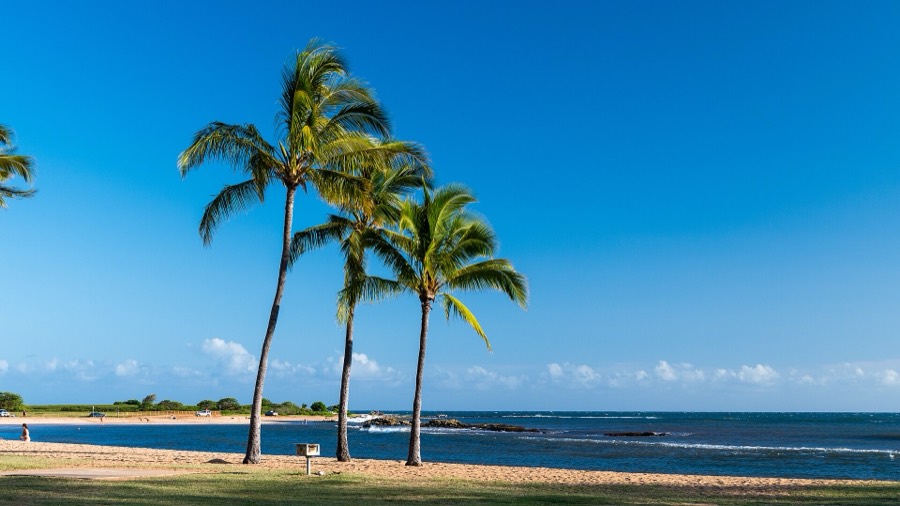
Where to swim: the main swimming area, inside the rocky reef that lies offshore, where people swim laps. It’s on the dry, sunny West Side. What to watch: anything past the reef. One tower, staffed daily, 8 a.m. to 6 p.m. The salt beds beside the beach belong to the families who work them each summer, so leave them be.
4
Hanalei Bay
North Shore · Best May to October
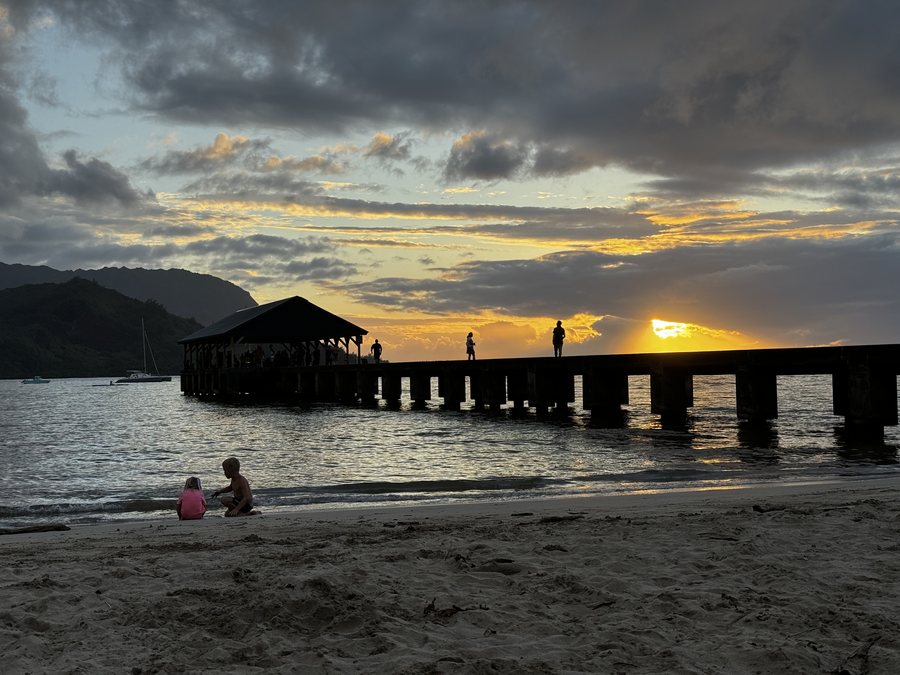
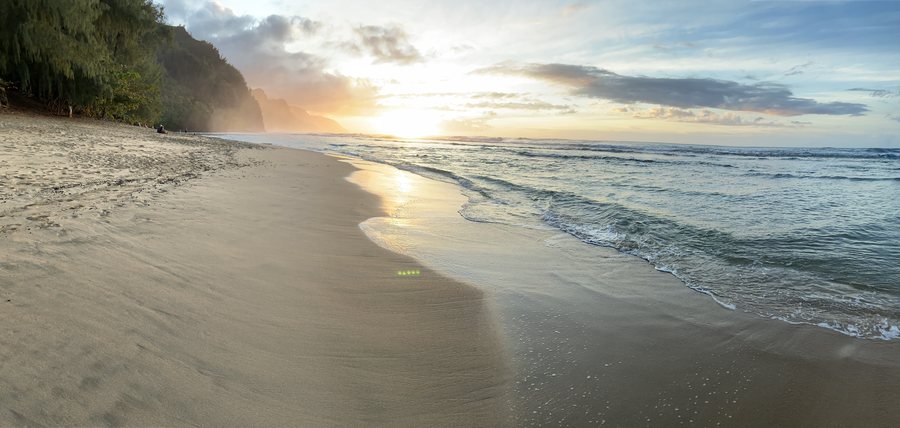
Where to swim: near one of the two towers, at the Pavilion or at Pine Trees, between May and October, when the State says north shores are mostly flat to small. What to watch: the Hanalei River mouth at the east end, by the pier. When the river runs high it pushes a strong current out to sea, strongest on a falling tide. From November on, north swells roll into the whole bay.
5
Kēʻē Beach
North Shore · Best May to October
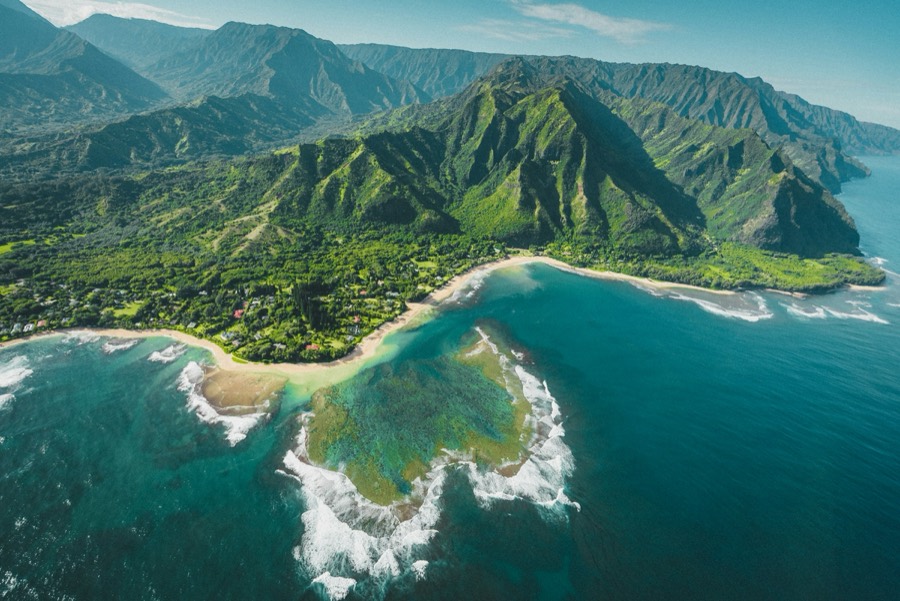
Where to swim: inside the reef lagoon right off the sand, spring through October. What to watch: the opening in the reef. Reef channels can carry strong currents even on a calm day, so stay in the lagoon and away from the gap. One tower, staffed daily, 8 a.m. to 6 p.m. Visitors need a Hāʻena State Park reservation.
6
Hāʻena Beach Park
North Shore · Best May to October
The one pick with no reef or wall to hide behind: it’s here for summer only, when the State says north shores are mostly flat to small. Where to swim: in front of the tower, staffed daily, 8 a.m. to 6 p.m. What to watch: winter. From November through April, the North Shore’s swells land right on this sand. Restrooms and showers at the park.


Winter: November to April
From November through April the State says north shores get “consistent huge and dangerous swells,” so Hanalei, Kēʻē and Hāʻena drop off this list. South shores are mostly flat to small. Source: State of Hawaiʻi Ocean Safety
1
Lydgate Beach Park
East Side · Both seasons
Where to swim: inside Morgan’s Ponds, the two ocean ponds a boulder breakwater has enclosed since 1964. The inner pond is the shallow one; the outer pond is deeper. What to watch: the open ocean on the far side of the boulders, and the Wailua River mouth just beside the park. The Lydgate tower is staffed daily, 8 a.m. to 6 p.m.
2
Poʻipū Beach Park
South Shore · Both seasons
Where to swim: on either side of the sand spit that runs out to Nukumoi Point, near one of the two towers (Nukumoi and Poʻipū). At the east end, a lava rock jetty holds a small, sandy wading pool, the shallowest water here. What to watch: south swells. Summer is this shore’s big-surf season, and in 2022 a south swell with 15-foot wave faces led to multiple rescues here. Monk seals rest on this sand too, so give them plenty of room.
3
Salt Pond Beach Park
West Side · Both seasons
Where to swim: the main swimming area, inside the rocky reef that lies offshore, where people swim laps. It’s on the dry, sunny West Side. What to watch: anything past the reef. One tower, staffed daily, 8 a.m. to 6 p.m. The salt beds beside the beach belong to the families who work them each summer, so leave them be.
Questions
Which Kauaʻi beaches are safest for swimming?
No beach is risk-free every day. The ones that lower the risk have a lifeguard tower and a reef, breakwater or bay that shelters the water, in the right season: Lydgate, Poʻipū Beach Park and Salt Pond all year, and Hanalei Bay, Kēʻē and Hāʻena in summer. Ask the lifeguard before you get in.
Where are the calmest beaches on Kauaʻi?
The ponds at Lydgate Beach Park sit behind a boulder breakwater, and Poʻipū Beach Park has a shallow wading pool behind a rock jetty. In summer, Kēʻē has a reef lagoon. Conditions change, so check today’s surf first. See surf conditions.
Is it okay to swim on Kauaʻi in winter?
At some beaches. From November through April the State says north shores get “consistent huge and dangerous swells,” while south shores are mostly flat to small. The winter picks are Lydgate, Poʻipū Beach Park and Salt Pond, which all have lifeguard towers. Check closures and the day’s surf first.
Does a lifeguard make a beach risk-free?
No. A lifeguard tower lowers the risk but does not remove it. Lifeguards can close the water when conditions turn dangerous, so follow their advice. For the most hazardous spots, see beaches with documented drownings. See which beaches have lifeguards.
What hours are lifeguards on duty at these beaches?
The State’s list of lifeguarded beaches shows every tower on this page staffed daily, 8 a.m. to 6 p.m. Before 8 and after 6 there is no one in the tower, so plan your swim for the middle of the day. See every lifeguarded beach on Kauaʻi.
Where is the shallowest water on Kauaʻi?
Two spots on this list are known for it: the inner pond at Lydgate, behind its boulder breakwater, and the small wading pool behind the lava rock jetty at the east end of Poʻipū Beach Park. Shallow water can still have currents and rocks, so stay near a lifeguard tower.
Why does Hanalei Bay leave this list in winter?
From November through April, the State says north shores get “consistent huge and dangerous swells,” and those swells reach the whole bay. Hanalei returns to the list in May, when north shores are mostly flat to small. The river mouth at the east end can pull out to sea in any season after heavy rain.
More lists: swimming, snorkeling, sunsets, sunrise, turtles & seals, kids & families, boogie boarding, most dangerous, secluded, shells & sea glass. See also which beaches have lifeguards, surf by shore and today’s closures.